Cooking with Cannabis Edibles Recipes and Tips
Cooking with cannabis edibles requires decarboxylating flower first to activate THC, then infusing it into butter or oil. Uforia Dispensary in Jersey City guides home cooks through strain selection (indica for relaxation, sativa for energy) and accurate dosing. Lab-tested products ensure consistent potency for safe, delicious infused meals.
Key Takeaways
- Decarboxylation activates THC by applying controlled low heat to cannabis flower before infusion.
- Indica strains deliver relaxing properties while sativa strains provide uplifting and energizing effects.
- Uneven cannabinoid distribution causes unpredictable potency; thorough mixing ensures consistent results in edibles.
- Low, steady heat over several hours extracts cannabinoids while preserving delicate terpenes during infusion.
What do you need to start cooking with cannabis?
Starting with cooking with cannabis edibles recipes requires three core components: a quality cannabis product, a fat-based infusion medium like cannabis infused olive oil or cannabutter, and basic kitchen tools. Uforia Dispensary stocks lab-tested flower, tinctures, and concentrates suited for home infusion. Skipping any one element produces weak, uneven, or wasted batches. For Jersey City dispensary edibles shoppers, choosing verified, lab-tested products from the start removes most of the guesswork from dosing later.
What cannabis product works best for beginners?
Cannabis comes in various strains, each with unique effects. Indica strains deliver relaxing properties, while sativa strains lean uplifting and energizing. Understanding the strain helps a cook choose recipes that complement the desired effect. Uforia Dispensary’s budtenders guide Jersey City customers through strain selection for specific culinary goals.
What role do THC and CBD play in edibles?
THC is the psychoactive compound in cannabis that produces a high. CBD is non-psychoactive and known for its therapeutic effects. A cook decides between THC-dominant, CBD-dominant, or balanced products before infusing. This choice determines whether the finished dish energizes, relaxes, or soothes.
What equipment does a home cook need?
A basic setup includes:
- Grind the cannabis flower to a consistent texture.
- Decarboxylate the ground flower in an oven at low heat.
- Combine the decarbed flower with butter, oil, or another fat.
- Simmer the mixture gently for the infusion period.
- Strain the plant material through cheesecloth or a fine mesh sieve.
Uforia Dispensary offers precise tinctures that skip the decarboxylation step entirely. Concentrates also simplify dosing for cooks who want repeatable results. The dispensary’s educational resources help customers understand products and their benefits before the first batch.
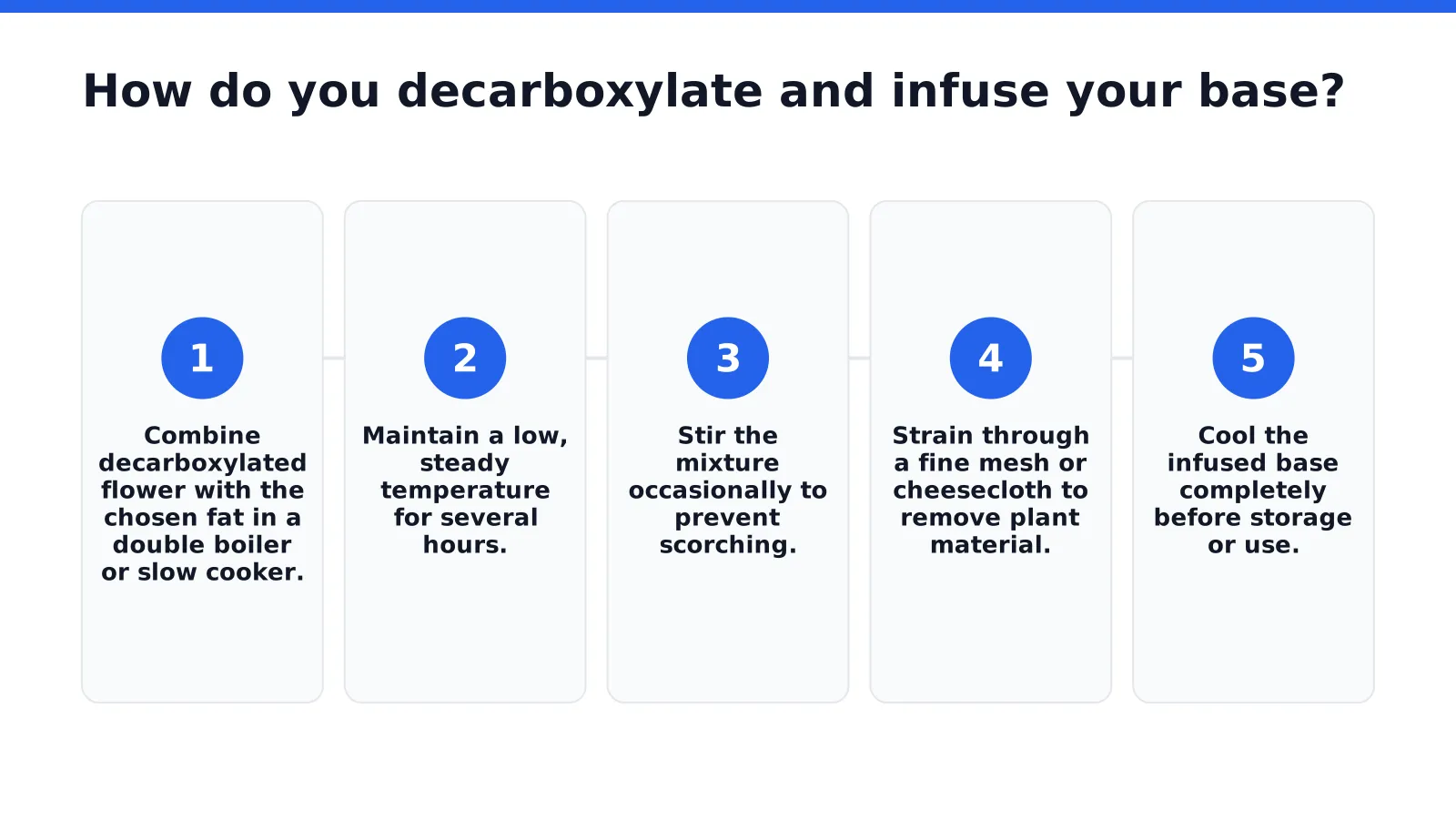
How do you decarboxylate and infuse your base?
This cannabis decarboxylation guide covers the two steps every home cook needs before a recipe comes together. Decarboxylation activates cannabis compounds through controlled heat. Infusion transfers those activated compounds into a fat or alcohol base for cooking.
Edibles provide an excellent alternative when smoking is not preferred or when home cooks explore new culinary territory. Cannabis adapts to countless recipes beyond the classic brownie, working in both sweet and savory dishes as well as beverages. The process begins with two essential steps: decarboxylation and infusion.
What temperature and time does decarboxylation require?
The standard method uses an oven set to a low temperature. Cannabis flower spreads evenly on a parchment-lined baking sheet. Baking lasts a set duration, with gentle stirring halfway through. The plant material should appear lightly toasted and feel dry to the touch. Lower temperatures preserve delicate terpenes. Higher temperatures risk burning the material and degrading active compounds.
How does infusion work after decarboxylation?
Infusion binds activated cannabinoids to a fat source like butter, coconut oil, or MCT oil. Learning how to make cannabutter is the most common starting point, since butter carries flavor well and works in nearly any recipe. The process follows a clear sequence:
- Combine decarboxylated flower with the chosen fat in a double boiler or slow cooker.
- Maintain a low, steady temperature for several hours.
- Stir the mixture occasionally to prevent scorching.
- Strain through a fine mesh or cheesecloth to remove plant material.
- Cool the infused base completely before storage or use.
Uforia Dispensary stocks a diverse selection of indica and sativa strains suited for home infusion projects. The local dispensary also carries precise tinctures that skip the infusion step entirely. These tinctures add directly to recipes for accurate dosing without extended preparation. Customers seeking cannabis in Jersey City find both flower and tincture options available for Cooking With Cannabis Edibles Recipes. Uforia Dispensary offers top-quality cannabis conveniently delivered to your doorstep, bringing ready-made options to home cooks who prefer skipping the kitchen work altogether.
What are common mistakes to avoid in edibles?
Common mistakes in homemade edibles lead to inconsistent potency and unpleasant experiences. Avoiding these errors protects both safety and enjoyment. Uforia Dispensary emphasizes safety and responsible consumption in all communications, a principle that extends directly to dosing guidance for homemade edibles.
Why does homemade edible potency vary so much?
Uneven cannabinoid distribution causes unpredictable effects. Without proper emulsification, THC clusters in some portions and leaves others inactive. This inconsistency turns a carefully planned dose into a gamble.
How can cooks prevent dosing disasters?
Precise measurement and patient testing prevent most problems. Accurate edibles dosing starts before the pan ever goes in the oven, not after. Follow these numbered steps for reliable results:
- Calculate total THC in the infused ingredient before adding it to any recipe.
- Mix the infusion thoroughly into the fat or oil base to ensure even distribution.
- Test a small portion of the finished edible and wait at least two hours before consuming more.
Skipping decarboxylation remains another frequent error. Raw cannabis contains THCA, not active THC. Heat transforms it. Without this step, edibles deliver no psychoactive effect. Uforia Dispensary’s knowledgeable staff assist customers in comparing strains, formats, and potency for responsible use, guidance that proves invaluable when selecting starting material. The company offers clear pricing and verified products, helping home cooks source consistent ingredients for reliable results. Rushing the infusion process also degrades quality. Low, steady heat over several hours extracts cannabinoids without destroying delicate terpenes. Uforia Dispensary provides educational resources and events to help customers understand products and their benefits, including safe cooking practices. A well-informed cook avoids the disappointment of a failed batch. For deeper guidance on product selection, the company’s THC gummies and edibles guide explains how different formats influence onset and duration.
FAQ
What equipment does a home cook need for cannabis edibles?
A basic setup includes a grinder, an oven for decarboxylation, butter or oil for infusion, a pot for simmering, and cheesecloth or a fine mesh sieve for straining. Uforia Dispensary offers tinctures that skip the decarboxylation step entirely.
How do you decarboxylate cannabis flower?
Spread ground cannabis evenly on a parchment-lined baking sheet and bake at a low temperature for a set duration, stirring halfway through. The flower should appear lightly toasted and dry, with lower temperatures preserving delicate terpenes.
What is the difference between THC and CBD in edibles?
THC is the psychoactive compound that produces a high, while CBD is non-psychoactive and known for therapeutic effects. A cook chooses THC-dominant, CBD-dominant, or balanced products before infusing, which determines whether the dish energizes, relaxes, or soothes.
Conclusion
Cooking with cannabis edibles transforms from guesswork into a rewarding culinary practice when you master decarboxylation, infusion, and precise dosing. Start with quality flower or tinctures suited to your desired effects, follow the foundational steps outlined here, and test small portions before serving. Your next move is selecting the right starting material, one that matches your recipe and potency goals, then committing to patience and accuracy throughout the process. Informed preparation ensures consistent, enjoyable results every time.